For decades, skincare corrected and make-up perfected. They occupied adjacent shelves and entirely separate mindsets. One focused on repair; the other on refinement. Today, that separation no longer feels relevant.
Complexion today is engineered around skin behaviour rather than surface tone alone. It considers barrier strength, pigmentation patterns, oil distribution, hydration balance, climate exposure and lifestyle stress. The modern base product is not merely matched; it is mapped. A condition-led complexion category is taking shape, where pigment responds to profile, and performance is measured by both finish and skin health.
RETHINKING SHADE: HOW SKIN PROFILING IS RESHAPING FORMULATION
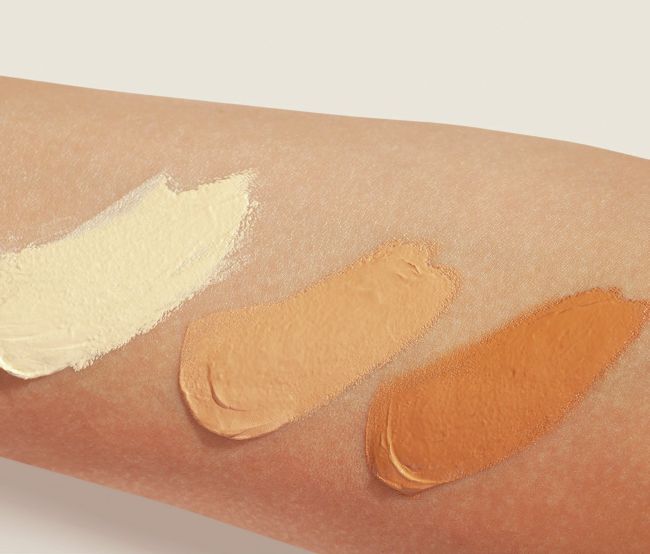
In a market as diverse as India, shade development demands precision. Klaudia Loretti-Korolec, Chief Operating Officer, Kryolan Cosmetics India, underscores the importance of structured inclusivity. “For diverse regions like India, which has a wide spectrum of skin tones, inclusive customisation is an effective way of profiling that ensures foundations, concealers, and other products can be personalised to cater to a variety of undertones across a range of depths.”
She adds, “In India, skin tones range from fair to medium, olive, and deep shades with undertones that may lean more towards yellow, red, or neutral. Understanding this and broadening the shade spectrum ensures that no one is left out.”
However, inclusivity today is driven by insight rather than assumption. “Consumer feedback and data analytics help understand which shades are most in demand and how they perform on different skin types. By analysing purchase patterns, social media trends, and direct customer feedback, companies can identify gaps in their shade range,” says Loretti-Korolec. Shade expansion is no longer reactive. It is informed, measured, and strategically refined.
“HYBRID MAKE-UP
only truly earns the
‘SKIN-FIRST’
label when it
PERFORMS
like both
SKINCARE
and
MAKE-UP
, without
COMPROMISING EITHER.”
- Klaudia Loretti-Korolec
WHEN DOES HYBRID MAKE-UP TRULY BECOME SKIN-FIRST?
Hybrid make-up has become a dominant category descriptor, but Loretti-Korolec cautions against superficial claims. “Hybrid makeup only truly earns the ‘skin-first’ label when it performs like both skincare and makeup, without compromising either.”
She outlines what those entail. “Use of ingredients with peer-reviewed data plays a crucial role. Inclusion should be at clinically validated levels that promise the desired benefits and should also be considered dermatologically safe to use. Stability testing ensures the active remains effective over the product’s full shelf life. Compatibility with pigments and UV filters is another parameter. A good balance between skincare functions and colour performance is another aspect brands need to consider.” Scientific rigour is nonnegotiable.
On the artistry front, execution determines credibility. Mozma Muneer Sajith, Celebrity Make-up Artist, Stylist, and Co-founder, The Glam Up Studio (TGUS) Salons, approaches complexion through layered diagnosis. “I start with observation, touch, and conversation… in that order,” she explains. Visual reading comes first. She studies light reflection, pore visibility, redness patterns, and dehydration lines. Then she gently assesses texture, elasticity, and oil distribution. A lifestyle discussion follows. “For me, skin analysis is less about categories and more about understanding that face as its own ecosystem,” says Muneer Sajith.
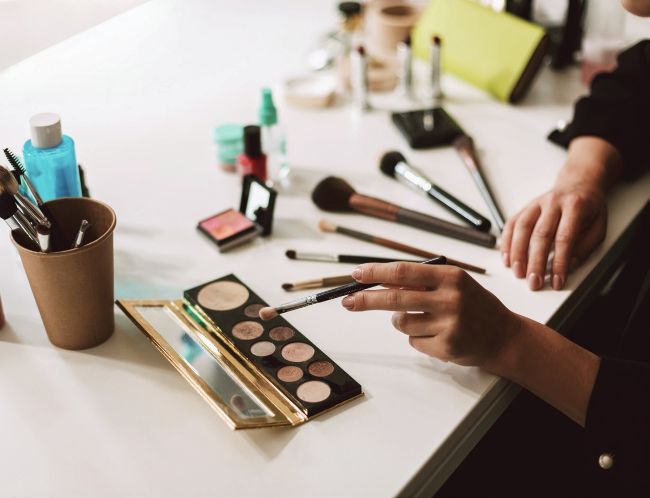
Technique is central to hybrid success. “Preparation + layering logic + ingredient intelligence matter more than marketing claims,” she notes, prioritising hydration balance, barrier-respecting priming, and thin, strategic layering. “Hybrid make-up works best when artists treat it as skin therapy, not just coverage.” The distinction lies in intention; coverage becomes a by-product of care.
“HYBRID MAKE-UP
works best when
ARTISTS TREAT
it as
SKIN THERAPY
,
NOT
just
COVERAGE
.”
- Mozma Muneer Sajith
TEXTURE, FINISH, WEAR: THE ROLE OF DATA IN COMPLEXION ENGINEERING
Complexion performance is increasingly engineered rather than assumed. “Data is central to modern complexion R&D. Texture, finish, and wear are no longer decided by aesthetic preference alone. They’re optimised through instrumental, biometric, and behavioural datasets tied to specific skin conditions,” explains Loretti-Korolec.
Instrumental techniques measure viscosity, pH, specific gravity, and melting and drop points to understand spreadability and rheology. Stability data guides refinement across different climates and conditions.
For Muneer Sajith, this precision aligns with her philosophy. “I work using a ‘correction without aggression’ philosophy,” she says. Acne requires breathable layers that avoid pore suffocation. Pigmentation calls for colour theory and light diffusion rather than heavy masking. Sensitivity demands calming textures and barrier respect.
“My goal is never to hide the skin; it is to let it heal while looking flawless,” she explains.
Clients are increasingly informed, yet guidance remains essential. “Clients know what they want, but artists know how to create it safely and beautifully,” she notes.
“My
GOAL
is never to
HIDE
the
SKIN
; it is to let it
HEAL
while
LOOKING FLAWLESS”
- Mozma Muneer Sajith
PRECISION AT SCALE: CAN PERSONALISATION BE COMMERCIALLY VIABLE?
Personalisation suggests intimacy. Scalability requires infrastructure. “Personalisation in make-up is one of the most exciting trends in beauty right now, but scalability has been a challenge,” Loretti-Korolec acknowledges. Technology is providing solutions. “A colour-matching machine helps ensure consistency in colour cosmetic production globally. This aids in maintaining colour consistency from lab scale to commercial bulk production.”
Operational vigilance follows. “Raw-material shelf-life and availability monitoring is done on a regular basis to ensure the quality of the product when scaled up. Thorough quality checks of the bulk post-production and of the products post-filling are conducted before they leave the facility to ensure standards are maintained.”
Inclusivity must also remain efficient. “Minimal but targeted expansion would add just a few shades that serve unique, underserved groups to fill specific gaps.” Precision at scale is possible, but only with discipline.
“PERSONALISATION
in
MAKE-UP
is one of the most
EXCITING TRENDS
in
BEAUTY
right now, but
SCALABILITY
has been a
CHALLENGE
.”
- Klaudia Loretti-Korolec
DATA VS INSTINCT: WHAT WILL DEFINE LEADERSHIP IN PERSONALISED MAKE-UP?
Technology can measure undertones and monitor performance. It can standardise output and predict trends. Yet artistry interprets what data cannot. “Technology can measure, but it cannot interpret emotion, culture, lighting, or individuality,” says Muneer Sajith. “AI gives data. Artists give soul, instinct, experience, and emotional intelligence.”
In fact, she believes the profession itself is evolving. “Make-up artists will become skin architects, beauty strategists, and personal image designers,” says Muneer Sajith.
As personalised make-up moves towards becoming industry standard, leadership will depend on equilibrium. Brands must combine clinical credibility with cultural sensitivity. Professionals must translate formulation science into human confidence. Pigment is no longer simply colour; it is condition-aware, calibrated, and personal. The future of complexion will belong to those who understand that performance begins beneath the surface.