There was a time when styling tools were judged by one metric alone: power. The higher the wattage, the faster the result; the hotter the plate, the sleeker the finish. But the modern salon no longer runs on brute force. It runs on control.
Across India, intelligent styling tools are changing the rhythm of professional hair services. Heat-sensing straighteners, airflow-calibrated dryers, and adaptive temperature systems are replacing the guesswork that once defined daily styling. The shift is not loud. It is precise. And it is deliberate.
FROM POWER TO PRECISION
For Rayed Merchant, Director at SSIZ International (Ikonic Professional), the transition has been deliberate. “Over the past few years at Ikonic, our focus has shifted from just creating powerful high-performance styling tools to building smarter tools that understand different hair types and needs,” he says. “Product innovation is not only about power, it’s about precision, protection, and personalisation.”
At Vega Professional, the shift has been equally strategic. “Smart tools have driven Vega Professional to prioritise hair health, personalisation, and damage prevention in innovations,” says Navdeep Jayee, Business Head, Vega Professional. “Heat-sensitive tech, like real-time temperature adjustment and airflow systems, has reduced reliance on extreme heat.”
He adds, “Balancing innovation with accessibility requires tiered offerings and local manufacturing. We offer BIS-approved Made-in-India entry-level smart tools, mid-range multifunctional products, and pro-grade innovations.”
Ozomax reflects similar intent. Says Bharat Bhushan Gupta, Proprietor, Ozomax, “A few years ago, our focus was mainly on building powerful tools. Now, it’s about creating precision-driven systems. Instead of just wattage and durability, we look at even heat distribution, hair safety, and user comfort.”
The evolution is clear. It is no longer about how much heat a tool can generate. It is about how intelligently it can manage that heat.
CLOSING THE DAMAGE GAP
The movement toward intelligent tools was driven by a recurring concern: hair damage. “We saw two big gaps in the styling market,” Merchant explains. “Many tools could style hair well but damaged hair in the process. Second, most tools didn’t control heat properly.”
Vega Professional identified similar concerns within the professional segment. “The professional styling market had key gaps like excessive heat damage from traditional tools and limited precision for consistent results,” says Jayee. “We responded with innovation in ionic tech and digital temperature controls.”
He further notes, “We prioritise even heat distribution via ceramic and tourmaline plates to eliminate hot spots and reduce passes per section. Ion generators add moisture, preventing dryness, breakage, and split ends.”
Ozomax saw the same pattern emerge in salons. “Stylists would crank up the heat to compensate, which isn’t ideal for hair or style quality,” Gupta says. “We moved from ‘more heat’ to ‘smarter heat.’”
In India’s diverse hair texture landscape, uniform settings no longer suffice. Intelligent regulation stabilises output and reduces dependency on extreme temperatures. The result: healthier strands, better shine retention, and more predictable results.
ON THE SALON FLOOR
For stylists, the difference is immediate. “Smart tools have made styling more intentional,” says Sumit Malkotia, Creative Head at Ikonic Professional. “Earlier it was instinct plus experience. Now it’s experience supported by technology.”
Virender Verma, Hair Education Head, Vega Professional, echoes that shift. “In the traditional era, styling was largely based on intuition. Today, with smart tools, we operate on information,” he says.
Heat sensing eliminates uncertainty. Controlled airflow allows more precise section work. “You’re not constantly worrying about overheating hair,” Malkotia explains. “The result is more consistent across clients.” Verma adds, “Intelligent heat management systems continuously regulate temperature to prevent hot spots and heat spikes.”
Blow-dries are completed in less time. Straightening requires fewer strokes. “Styling time has reduced, especially for blow-dries and straightening hair,” Malkotia says. “The hair looks polished faster, and there’s less stress on the cuticle because the heat is controlled.”
Verma expands on the thought. “In a fast-paced salon, time is the most expensive commodity. Smart technologies allow stylists to work faster and more efficiently without compromising on smoothness, shine, or overall hair health.” Malkotia also observes a subtle but important mindset shift. “You move from ‘controlling the tool’ to ‘collaborating with the tool,’” he says. Verma expands on that evolution: “We are moving from being just artists to becoming hair technicians or data-driven stylists.”
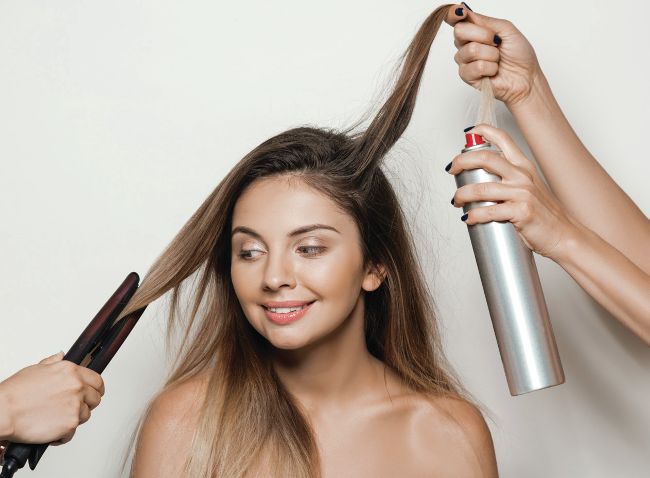
That collaboration becomes especially valuable in high-volume salon environments where efficiency cannot come at the cost of finish.
COMPETITIVE EDGE AND CLIENT TRUST
From a business standpoint, smart tools are becoming a competitive advantage. “Salons today have a competitive advantage thanks to smart tools,” Merchant notes. “Clients are much more conscious and take note of the tools being used.” Jayee agrees. “Smart tools provide salons a clear competitive edge by enhancing service speed, precision, and client satisfaction,” he says. Gupta reinforces the positioning. “We’re partners in salon growth. Smart tools mean consistent results, faster service, and healthier hair. Clients take notice and trust builds.”
For salons, the advantage is tangible: faster service cycles, improved finish consistency, and stronger client trust.
EDUCATION: THE NON-NEGOTIABLE
Technology, however, does not replace technique. “I think education is very important,” Malkotia emphasises. “Even the smartest tool won’t perform fully if the stylist doesn’t understand airflow direction, heat behaviour, and section control.”
Verma is unequivocal. “Introducing an advanced styling tool without proper education is like handing a Formula 1 car to a street driver,” he says. “Education is the foundational bridge between a tool’s potential and the stylist’s performance.”
Intelligent systems can regulate temperature, but sectioning, tension, movement, and finish remain human decisions.
THE FUTURE IS ENGINEERED
Looking ahead, AI, diagnostics, and connected technology are poised to further refine professional styling. “In the future, AI, diagnostics, and connected technology will likely play a bigger part in professional hair tools,” Merchant says. Jayee anticipates systems that analyse hair health in real time and auto-adjust heat settings. Gupta adds, “Think hair-type sensing, automated heat adjustment, usage analytics, and maintenance alerts. Adoption will be value driven.”
Adoption may be gradual, but value will determine speed. What remains constant is the craft. Intelligent artistry does not diminish creativity; it refines it. The stylist remains central. Instinct remains vital. What has changed is the partnership. The tools now regulate, respond, and assist. And in that collaboration between human skill and engineered precision, modern salon performance finds its new standard. professionalbeauty.in